
Building Water Features That Hold and Function
Pond & Lake Construction in Town Creek for farm operations, recreation, and water retention needs
A properly constructed pond holds water year-round, supports fish populations, and provides reliable water for livestock or irrigation without constant leakage or siltation problems. Pond construction involves excavating a basin in suitable soil, building an earthen dam if the site requires impoundment, and shaping the basin floor and shoreline to prevent erosion and establish proper depth zones. Grissom Site Development LLC constructs new ponds and expands or restores existing ones in Town Creek, handling everything from small farm ponds to larger recreational lakes where water storage and aquatic habitat are primary goals.
The process begins with site evaluation to confirm soil type, watershed size, and groundwater conditions that determine whether the location will hold water without synthetic liners. Excavation creates the basin and uses removed soil to build or reinforce dams, with clay or other impermeable material compacted in layers to prevent seepage through the structure.
Arrange a site evaluation to assess your property's suitability for pond construction and determine the size and configuration that matches your water needs.
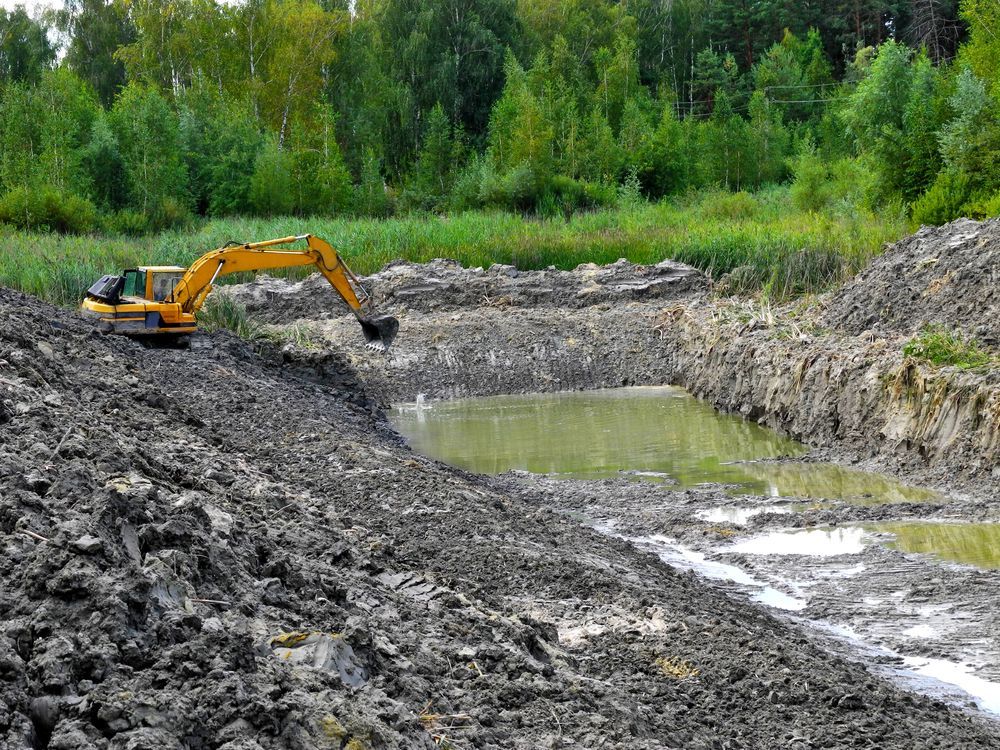
What Proper Pond Construction Requires
Pond construction depends on matching the excavation depth, basin shape, and dam design to the site's soil characteristics and intended use. Clay or silty soils with low permeability hold water naturally, while sandy or rocky soils often require imported clay for the basin floor or dam core to prevent leakage. The basin is excavated with sloped sides rather than vertical walls to prevent erosion, and depth varies across the pond to create shallow areas for aquatic plants and deeper zones that remain cool enough for fish during summer heat.
Once construction finishes, you have a basin that fills from surface runoff, springs, or groundwater, with a spillway or overflow structure that safely releases excess water during heavy rain. The shoreline is graded smooth and typically seeded to prevent erosion as vegetation establishes. Ponds designed for fish require minimum depths of eight to twelve feet in North Alabama to prevent summer oxygen depletion and winter freezing, while shallower farm ponds focused on livestock watering can function with less depth.
Dam construction includes compacting soil in lifts, installing overflow pipes or spillways, and establishing vegetation on the dam face to prevent erosion and burrowing animals from compromising the structure. Ponds built incorrectly often leak, silt in rapidly, or fail during flood events when dams aren't engineered to handle watershed runoff volumes.
Answers to Frequent Pond Construction Questions
Building a pond that functions reliably requires understanding site conditions and design considerations that affect long-term performance.
What soil types work best for holding water in ponds?
Clay and silty soils with at least twenty percent clay content naturally seal and hold water, while sandy or gravelly soils allow seepage that prevents ponds from filling. Soil testing before construction determines whether the site needs imported clay or a synthetic liner.
How large does the watershed need to be for a pond to fill?
The drainage area feeding the pond must be large enough to capture sufficient runoff, typically requiring a watershed at least five to ten times larger than the pond's surface area in Town Creek's rainfall patterns. Sites with springs or high groundwater reduce dependence on surface runoff.
What prevents ponds from silting in over time?
Vegetated buffers around the shoreline, proper watershed management, and avoiding construction in areas with active erosion reduce sediment inflow. Ponds built in heavily eroding watersheds require sediment basins or other control measures to extend functional life.
How deep should a recreational pond be for fish?
Bass, bluegill, and catfish need at least eight feet of depth to survive summer heat and winter cold in North Alabama, with deeper zones providing temperature refuge during extremes. Shallower ponds experience oxygen depletion and temperature swings that stress or kill fish populations.
What's involved in dam construction for pond impoundment?
Dams are built by compacting native or imported clay in layers, installing a core trench to prevent seepage under the structure, and shaping the downstream face with gentle slopes that resist erosion. Overflow spillways release excess water without eroding the dam or flooding adjacent areas.
Grissom Site Development LLC constructs ponds and lakes for agricultural, recreational, and water management purposes across properties in North Alabama. Contact us to evaluate your site's suitability and discuss design options that match your intended use.